

HERS Ratings
Energy ratings for more efficient, better-performing homes
RunBrook provides HERS rating services to help builders, developers, and project teams measure, document, and improve the energy performance of homes and residential communities.
Our certified RESNET Home Energy Raters are experienced in rating single-family homes, multifamily projects, tract home developments, and large-scale residential communities. With an efficient process and strong field experience, RunBrook helps project teams meet energy goals, support compliance, and communicate the value of energy-efficient construction.
What is a HERS rating?
The Home Energy Rating System, or HERS Index, is the industry standard used to measure a home’s energy efficiency. It is also a nationally recognized system for inspecting, testing, and calculating a home’s energy performance.
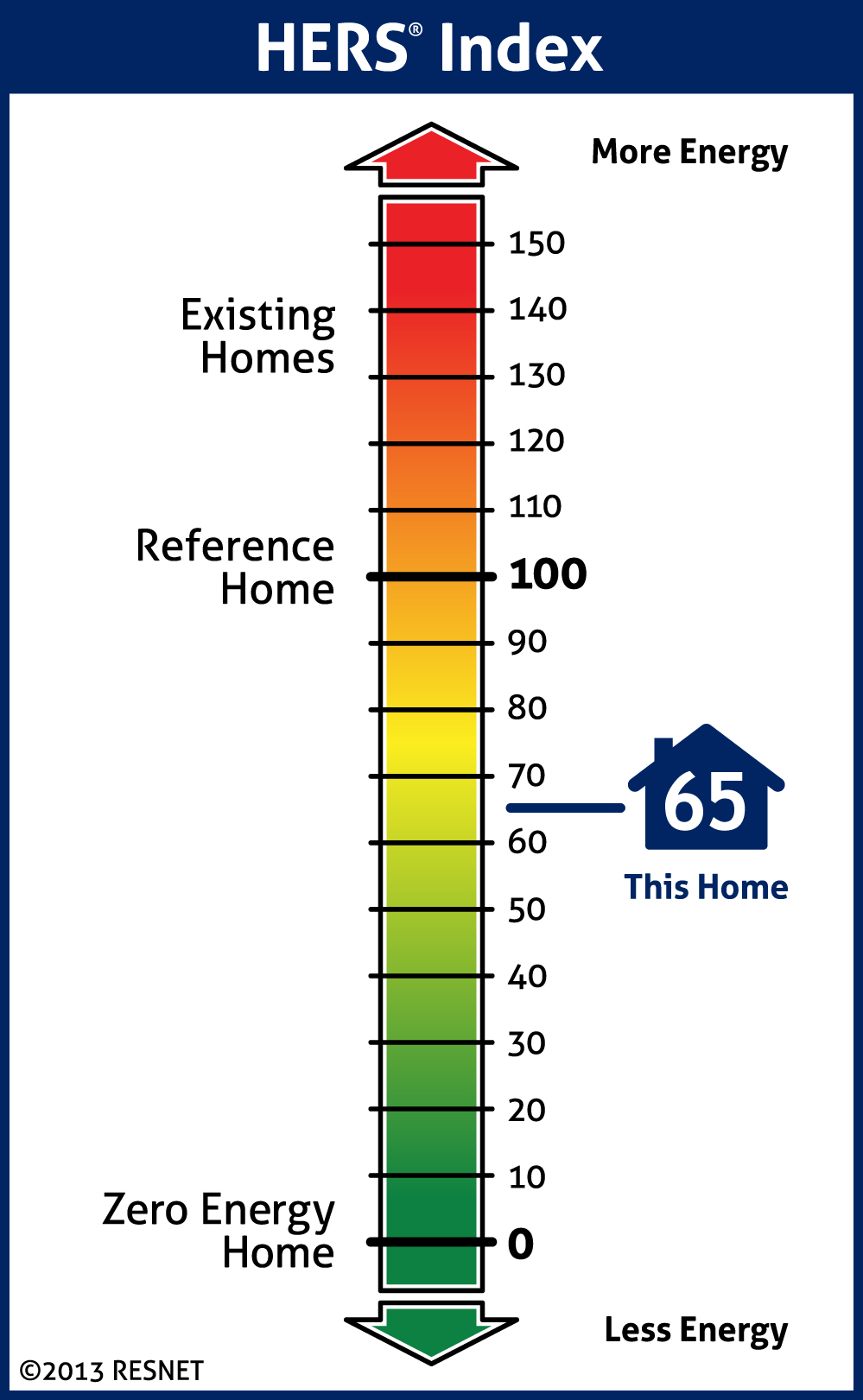
A HERS Index score shows how efficiently a home is expected to operate. In general, a lower HERS Index score means the home is more energy efficient, while a higher score means the home uses more energy compared to the reference home.
To calculate the score, a certified RESNET Home Energy Rater evaluates the home’s design, systems, materials, and tested performance. The home’s data is then compared to a reference home of the same size and shape, making the score relative to the specific home being rated.
How the HERS Index works
Lower scores mean better energy performance
The HERS Index compares a rated home to a reference home of the same size, shape, and type. This makes the score specific to the home being evaluated rather than a one-size-fits-all comparison.
A lower HERS Index score indicates better energy efficiency. Builders can use this score to demonstrate improved performance, support certification or compliance goals, and communicate the value of energy-saving construction to buyers, renters, and owners.
For many project teams, the HERS Index becomes a practical tool for showing how design decisions, HVAC systems, insulation, air sealing, windows, and other features contribute to overall energy performance.

Why HERS ratings matter?
Measure performance and demonstrate efficiency
As more buyers, renters, developers, and builders prioritize energy efficiency, HERS ratings provide a clear and recognized way to measure how a home performs. A HERS Index score helps show how efficiently a home operates and gives project teams a way to verify, document, and market energy performance.
-
Verify that homes are designed and built with energy performance in mind.
-
Identify strategies that may help reduce heating, cooling, and overall utility costs.
-
Give buyers, renters, and owners a clear way to understand the home’s energy efficiency.
-
Provide documentation that may support energy code compliance, green building certifications, utility programs, or builder performance goals.
-
Use field inspections and testing to verify key systems, assemblies, and installation details.
-
Coordinate ratings efficiently across multifamily, tract home, and production home communities.
What a HERS rater evaluates
Key areas that affect energy performance
A certified RESNET Home Energy Rater reviews the home’s major energy-related features and systems. These details help determine how efficiently the home is designed, built, and expected to operate.
Common items evaluated include:
Attics, foundations, & crawlspaces
Windows & doors
Vents & ductwork
HVAC systems
Water heating systems
Thermostats & controls
Air leakage through the home’s envelope
Leakage in the heating & cooling distribution system
Exterior walls, both above & below grade
Floors over unconditioned spaces, such as garages or cellars
Ceilings & roofs
RunBrook’s HERS rating services
Experienced support for residential & multifamily projects
RunBrook’s certified RESNET Home Energy Raters are skilled at conducting energy ratings for a wide range of residential projects, especially multifamily developments, tract homes, production home communities, and large-scale residential construction.
Our team understands the scheduling, documentation, and field coordination needed to support projects with multiple homes, units, buildings, or phases. We work closely with builders, developers, construction managers, energy consultants, and project teams to keep the rating process organized and efficient.

RunBrook can support:
Single-family homes
Multifamily developments
Tract home projects
Production home communities
Townhome projects
Build-to-rent communities
Residential community developments
Above-code and green building programs
Testing & verification services
Field data that supports accurate ratings
A HERS rating is not based only on drawings or assumptions. It also relies on inspections, performance testing, and field verification to confirm how the home was built.
Depending on the project scope, RunBrook can provide related services such as:
By combining HERS ratings with field testing and building performance knowledge, RunBrook helps project teams create more accurate ratings and stronger energy performance documentation.
HERS ratings for builders & developers
Support for compliance, certification, & marketing
For builders and developers, HERS ratings can be used as both a performance tool and a marketing advantage. As consumer demand for energy-efficient homes continues to grow, many builders are using energy performance as part of their construction approach and communicating expected energy savings to buyers, renters, and owners.
A HERS rating can help:
Document energy performance
Support code compliance
Support LEED, NGBS, ENERGY STAR, and other programs
Help lower HERS Index scores through better design and construction strategies
Show buyers and tenants the value of energy-efficient features
Improve quality control across multiple homes or units
Provide third-party verification from a certified RESNET Home Energy Rater



Our process
Clear, coordinated, and efficient
Step - 1 Review project information
We review drawings, specifications, energy features, HVAC systems, and project goals.
Step - 2 Model & evaluate the home
Our team enters the home’s design and system information into rating software and compares it to the applicable reference home.
Step - 3 Perform field inspections & testing
A certified RESNET Home Energy Rater verifies key construction details and performs required testing, such as blower door or duct leakage testing.
Step 4 - Provide rating results & documentation
RunBrook provides the HERS Index score and supporting documentation for compliance, certification, program requirements, or project records.


Why choose RunBrook?
HERS rating experience for high-volume residential projects
RunBrook brings technical expertise, field coordination, and building performance knowledge to every HERS rating project. Our team is especially equipped to support multifamily developments, tract homes, and production builders with efficient scheduling, clear documentation, and reliable communication.

Project teams choose RunBrook for:
Certified RESNET Home Energy Raters
Experience with multifamily and tract home projects
Support for high-volume production schedules
Blower door and duct leakage testing capabilities
HVAC grading and building performance knowledge
Energy modeling and certification support
Clear reporting and documentation
Coordination with builders, developers, and construction managers
Support for LEED, NGBS, ENERGY STAR, and other programs
Service throughout Florida and select projects outside Florida
Frequently Asked Questions
-
A HERS rating is performed by a certified RESNET Home Energy Rater who is trained to inspect, test, and calculate home energy performance.
-
A HERS rating considers items such as insulation, windows, doors, HVAC systems, water heating, ductwork, air leakage, duct leakage, thermostats, and other energy-related features.
-
Yes. Field inspections and performance testing are typically part of the rating process. This may include blower door testing, duct leakage testing, and other verification services depending on the project.
-
Yes. HERS ratings are commonly used to support energy code compliance, certification programs, builder performance goals, and other project requirements.
-
Yes. A HERS Index score gives builders a clear way to communicate energy performance and efficiency to buyers, renters, and owners.
-
RunBrook should be involved early in design or pre-construction when possible. Early involvement allows the team to review energy strategies, identify opportunities to improve the score, and coordinate required inspections and testing.
-
Yes. RunBrook is experienced in providing HERS rating services for multifamily developments, tract homes, production home communities, townhomes, and other large-scale residential projects.
-
Yes. RunBrook can help project teams evaluate energy strategies, review HVAC and envelope performance, and identify opportunities that may help improve the final HERS Index score.
-
Yes. RunBrook provides rating results and documentation to support compliance, certification, program requirements, and project records.
-
Yes. Our team can support select projects outside Florida depending on project scope, schedule, and location. Contact us for more information.
Prefer to talk first?
Call us at 1-833-RunBrook
(1-833-786-2766)
or email us directly at info@runbrook.com
We’ll get back to you right away!
Discuss Your Next Project
If your project requires energy modeling, certification support, HERS ratings, blower door testing, or other building performance services, RunBrook can help keep the process moving from design through final verification.