
HVAC Grading
Verify HVAC quality. Improve performance. Lower HERS scores.
RunBrook provides HVAC grading services performed by certified HERS Raters to help builders, developers, and contractors verify that HVAC systems are designed, installed, and operating as intended. HVAC grading can help improve energy performance, reduce HERS Index scores, support code and program compliance, and provide confidence that heating and cooling systems are performing efficiently.
What is HVAC grading?
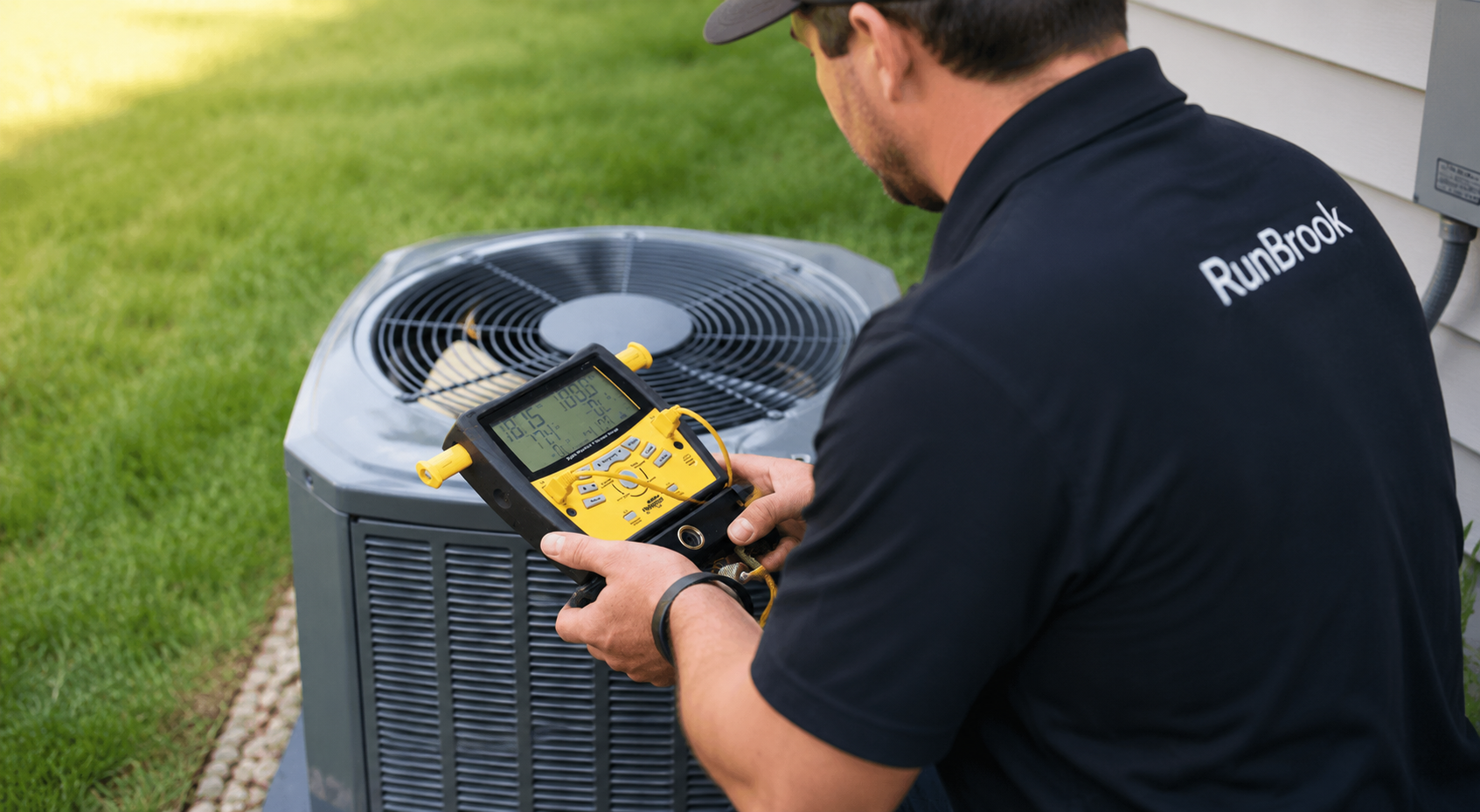
HVAC grading is a field verification process used to evaluate the quality of an HVAC system’s design, installation, and performance. Performed by a certified HERS Rater, HVAC grading reviews key system details such as equipment selection, refrigerant charge, fan airflow, duct design, duct installation, and overall system setup.
Rather than only confirming that equipment is present, HVAC grading helps verify that the system has been properly designed and installed to deliver efficient, reliable comfort. This is especially valuable for builders seeking better HERS scores, improved energy performance, and stronger quality assurance across residential, multifamily, and production home projects.
Key HVAC grading components
-
HVAC grading begins with verifying whether the system has been appropriately designed for the home or building. Proper system design helps ensure that equipment is not oversized, undersized, or mismatched for the intended load.
May include review of:
Equipment sizing
System capacity
Load calculation information
Equipment selection
Duct layout and design intent
System documentation
Common inspection areas include:
Exterior wall assemblies
Attic and ceiling transitions
Floor and wall connections
Window and door openings
Penetrations through the envelope
Garage-to-living-space separations
Mechanical, plumbing, and electrical openings
-
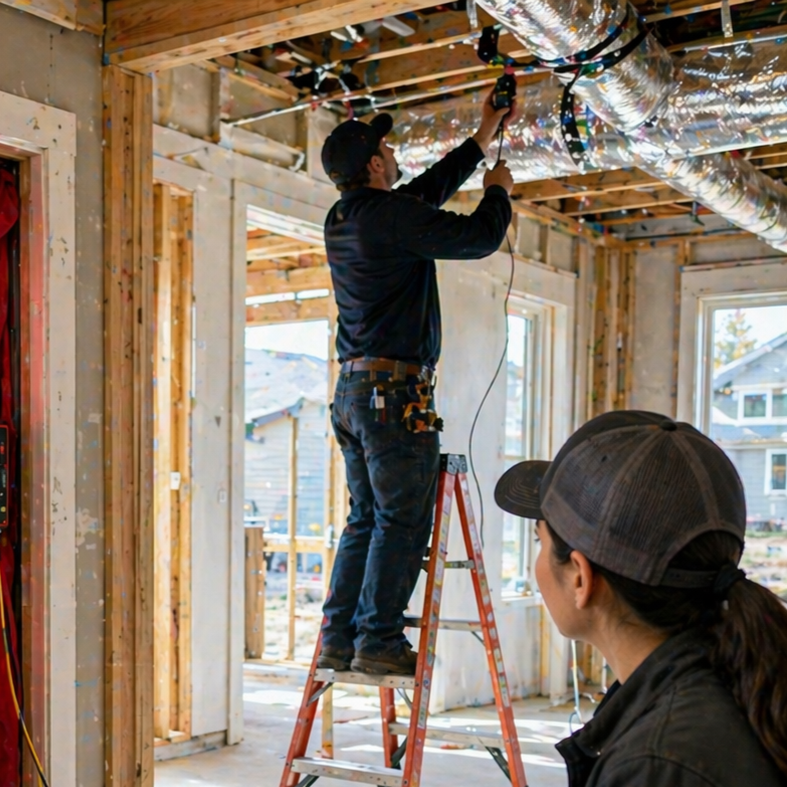
A properly designed system must also be installed correctly in the field. RunBrook reviews key installation details to help verify that equipment and duct systems match project requirements and support efficient operation.
May include review of:
Equipment installation
Duct installation quality
Supply and return layout
Duct sealing
Register and grille installation
Accessibility and serviceability
System configuration
-
Correct refrigerant charge is critical for cooling performance, system efficiency, humidity control, and equipment life. Improper charge can reduce capacity, increase energy use, and cause comfort issues.
-
Proper fan airflow helps the HVAC system deliver the correct amount of conditioned air throughout the home. Incorrect airflow can affect comfort, efficiency, equipment performance, and humidity control.
May include review of:
Airflow across the system
Fan speed settings
External static pressure
Supply and return airflow balance
Manufacturer airflow requirements
-
The duct system plays a major role in how effectively heating and cooling are delivered. HVAC grading helps verify duct installation quality and supports improved system performance.
May include review of:
Duct leakage results
Duct sizing and layout
Airflow restrictions
Proper sealing
Kinks, compression, or disconnected ducts
Return air pathways
Why HVAC grading matter
Better HVAC performance starts with proper installation
Even high-efficiency HVAC equipment can underperform if it is not installed, charged, or configured correctly. HVAC grading helps identify whether the system is operating as designed and whether important installation details meet the required performance criteria.
-
HVAC grading can help improve a home’s energy model results and contribute to a lower HERS Index score.
-
Verify that HVAC equipment, ducts, airflow, and system components are installed correctly.
-
Proper system setup helps reduce hot and cold spots, humidity issues, and airflow problems.
-
HVAC grading can support energy code requirements, HERS ratings, and above-code programs.
-
Identifying installation or setup issues early can help reduce homeowner complaints and warranty-related service calls.
-
Correct refrigerant charge, fan airflow, and duct performance help HVAC systems operate more efficiently.
Residential & multifamily HVAC grading
Built for production schedules
RunBrook supports builders, developers, and project teams with HVAC grading services designed for residential, multifamily, and production home projects. Our team understands the importance of accurate field verification, timely scheduling, and clear communication with construction managers, HVAC contractors, and energy consultants.
For large-scale projects, HVAC grading can help maintain consistency across multiple homes or units while supporting lower HERS scores and stronger energy performance results.

Why choose RunBrook?
RunBrook provides HVAC grading services with the field experience, technical knowledge, and project coordination needed to support builders and developers. Because our team also performs HERS ratings, blower door testing, duct leakage testing, and quality assurance inspections, we understand how HVAC performance fits into the larger picture of building energy efficiency.
By partnering with RunBrook, builders can expect:
Certified HERS Rater verification
HVAC design and installation review
Refrigerant charge and fan airflow verification
Residential, multifamily, and production home expertise
Support for lower HERS Index scores
Coordination with builders, HVAC contractors, and project managers
Clear reporting and performance documentation
Fast scheduling and turnaround times
Third-party verification for code, ratings, and program requirements
Building science and energy performance knowledge
Frequently Asked Questions
-
These inspections are typically most valuable before drywall, during insulation installation, before blower door or duct leakage testing, or before final inspection and project closeout.
-
Yes. By reviewing air sealing, envelope details, insulation alignment, and duct-related items before testing, these inspections can help reduce the likelihood of failed performance tests.
-
Yes. RunBrook can provide clear inspection notes, photos when applicable, and documentation to help support corrections, compliance, and project closeout.
-
Quality assurance inspections are not always required by code, but many builders and developers use them to reduce risk, improve consistency, and avoid costly issues before final inspections or performance testing.
-
These inspections are commonly requested by builders, developers, general contractors, construction managers, energy consultants, and owners who want added confidence in the quality and performance of a project.
-
Yes. Inspection scopes can be tailored based on the project type, construction phase, building systems, and specific concerns from the builder or project team.
-
RunBrook documents the findings clearly so the project team can review, correct, and prepare for the next construction phase, performance test, or inspection.
-
Yes. Reinspection can be scheduled to verify that noted items have been addressed and the project is ready to move forward.
-
No. These inspections are designed to support construction schedules by identifying issues early, when they are easier and faster to correct.
-
Yes. Quality assurance inspections can support project teams pursuing improved energy performance, green building certifications, or above-code construction standards.

Prefer to talk first?
Call us at 1-833-RunBrook
(1-833-786-2766)
or email us directly at info@runbrook.com
We’ll get back to you right away!
Discuss Your Next Project
If your project requires energy modeling, certification support, HERS ratings, blower door testing, or other building performance services, RunBrook can help keep the process moving from design through final verification.