
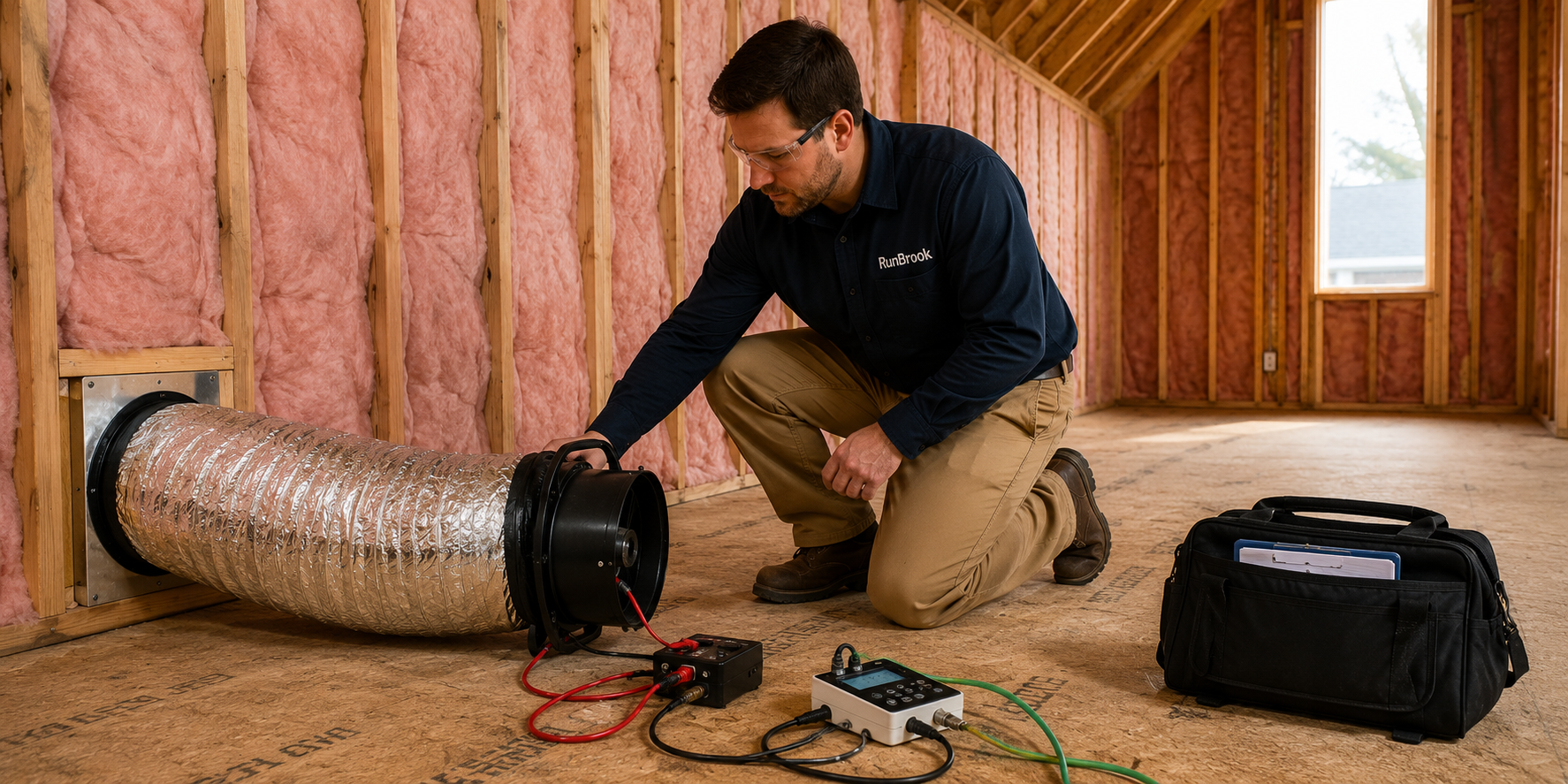
Duct Leakage Testing
for code compliance & energy efficiency
Why duct leakage testing matters
Improve HVAC efficiency, comfort & building performance
Leaky ducts can reduce HVAC equipment capacity, increase heating and cooling costs, create humidity problems, and make rooms feel uncomfortable. In some homes, duct leakage can account for a significant portion of total energy loss, causing HVAC systems to work harder than necessary.
-
Identify duct leaks that allow conditioned air to escape before it reaches the intended rooms.
-
Help heating and cooling systems deliver air more efficiently and operate closer to their designed performance.
-
Reduce hot and cold spots, weak airflow, humidity issues, and uneven room temperatures.
-
Confirm that duct systems have been properly installed, connected, and sealed by the HVAC contractor.
-
Meet applicable duct leakage testing requirements for residential, multifamily, and certain commercial projects.
-
Provide testing documentation for programs such as LEED, ENERGY STAR, utility incentives, or other performance-based requirements.
What is duct leakage testing?
Duct leakage testing measures how much conditioned air escapes through leaks, gaps, disconnected sections, or poorly sealed connections within an HVAC duct system. Because ductwork distributes heated and cooled air throughout a home or building, leaks in the system can significantly reduce HVAC performance, increase energy consumption, and negatively impact overall indoor comfort.
Leaky ducts can contribute to higher heating and cooling bills, uneven room temperatures, humidity issues, and indoor air quality concerns. In many homes and buildings, duct leakage can account for up to 25% of total energy loss, causing HVAC systems to work harder than necessary to maintain comfortable indoor conditions.
A duct leakage performance test uses specialized equipment to pressurize the duct system with a calibrated fan while measuring airflow and pressure within the ducts. The amount of air required to maintain pressure within the system helps determine how tightly sealed the ductwork is. Testing can be configured to measure total duct leakage or leakage specifically connected to the outside of the building envelope.
Residential & production home expertise
Fast, accurate testing for projects around the country
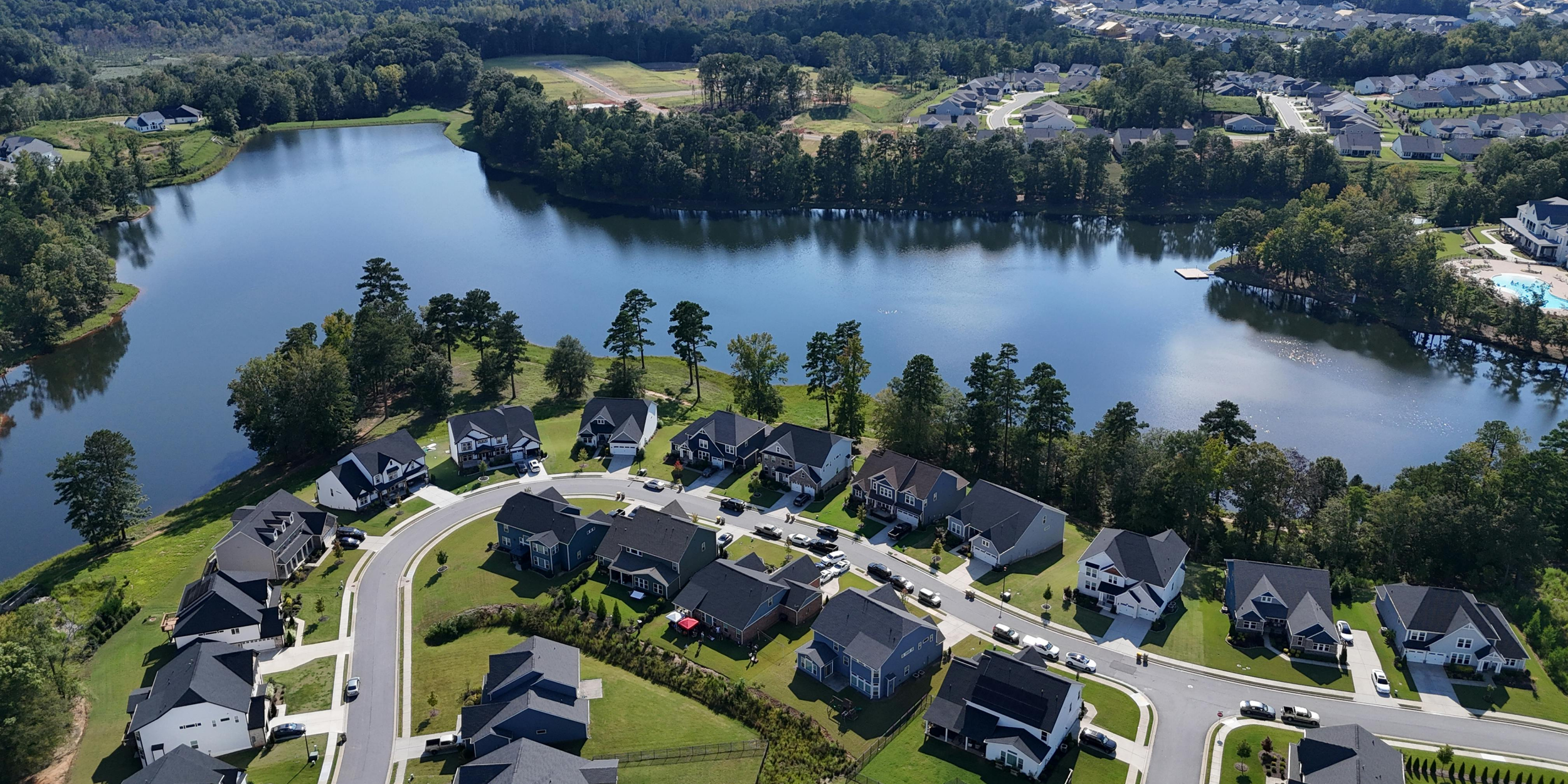
RunBrook provides duct leakage testing for single-family homes, multifamily communities, townhomes, build-to-rent developments, and large-scale production home projects. Our team understands the importance of reliable scheduling, fast turnaround times, and clear communication with construction managers, superintendents, HVAC contractors, and inspection teams.
For high-volume residential projects, our process is designed to keep testing efficient across multiple homes, units, buildings, or construction phases while providing accurate, code-compliant results.
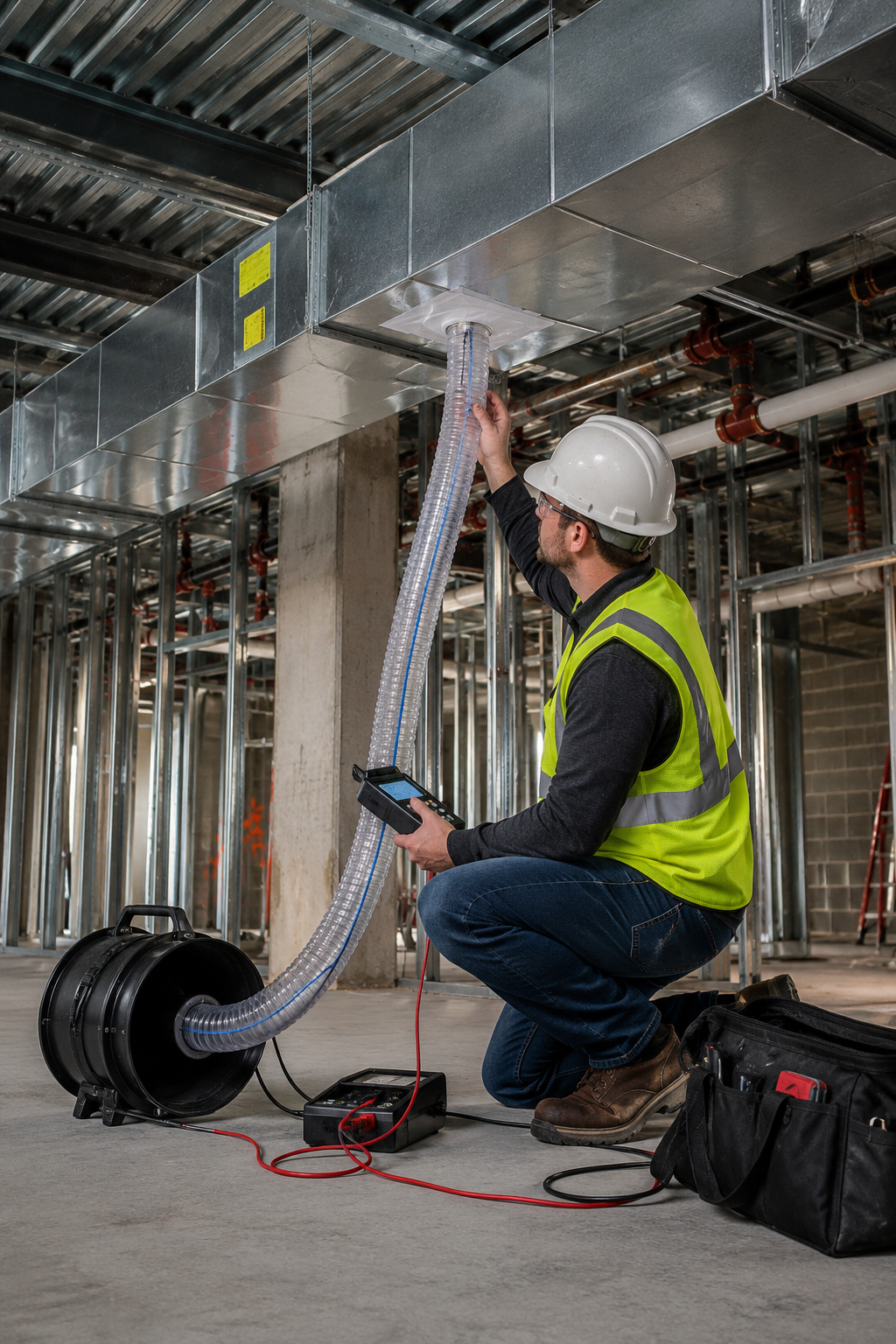
Commercial duct leakage testing
We provide duct leakage testing for commercial buildings, multifamily properties, office spaces, mixed-use developments, and other large-scale construction projects. Our team understands the complexity of commercial HVAC systems and delivers dependable testing services that support energy performance verification and project compliance requirements.
Our efficient testing process helps contractors and project managers stay on schedule while ensuring accurate documentation and reliable results.
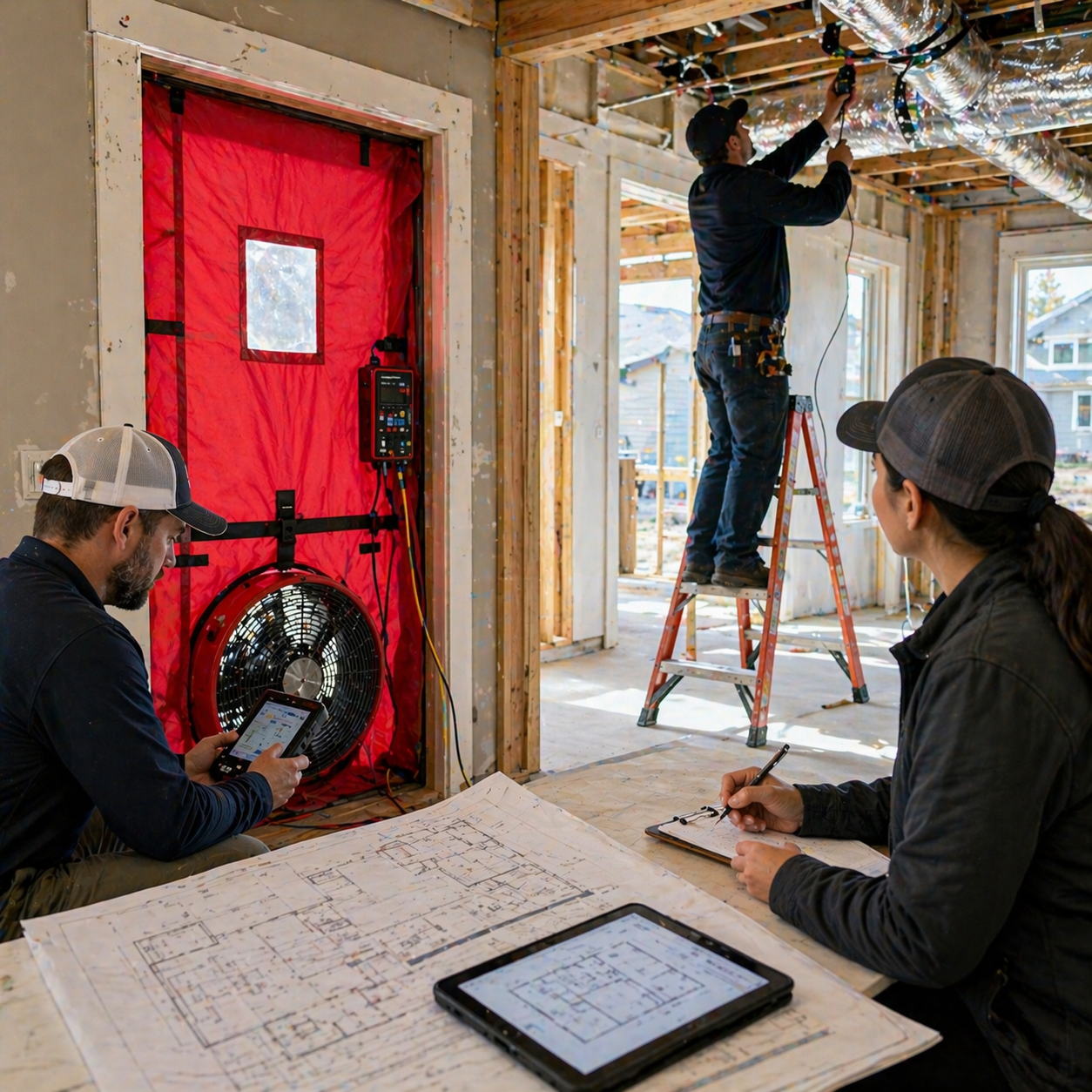
By partnering with RunBrook, builders can expect:
Reliable scheduling and fast turnaround times
Experienced technicians and calibrated equipment
Clear communication with project managers and site supervisors
Efficient coordination across multiple units and phases
Accurate testing and documentation for code compliance
Frequently Asked Questions
-
Yes. Many jurisdictions in Florida and other states require duct leakage testing for new residential construction, multifamily developments, and certain commercial projects as part of energy code compliance. Requirements vary by state, city, county, and building type. RunBrook can help determine what testing is needed for your specific project.
-
Many jurisdictions throughout Florida require blower door testing as part of the energy code compliance process for new residential, multifamily, and commercial construction projects. Requirements can vary by city, county, and building type. Our team stays up to date with local code requirements and can help determine whether your project requires testing and what standards must be met for approval.
-
Most residential duct leakage tests take approximately 1–2 hours depending on the size and complexity of the HVAC system and building.
-
Common causes include poor duct sealing, disconnected ducts, damaged ductwork, loose connections, and improper HVAC installation.
-
Common signs include uneven room temperatures, weak airflow, excessive dust, high utility bills, humidity problems, and HVAC systems that run longer than expected.
-
No. Duct leakage testing is safe, non-invasive, and performed using specialized calibrated equipment designed specifically for HVAC systems.
-
Yes. We provide detailed reporting and documentation to support inspections, energy code compliance, and project closeout requirements.
-
Your project is typically ready for duct leakage testing once the duct system has been fully installed, sealed, and prepared for inspection. Testing should be scheduled before final inspection or project closeout, allowing time to identify and correct any leakage issues without delaying the construction schedule.

Prefer to talk first?
Call us at 1-833-RunBrook
(1-833-786-2766)
or email us directly at info@runbrook.com
We’ll get back to you right away!
Discuss Your Next Project
If your project requires energy modeling, certification support, HERS ratings, blower door testing, or other building performance services, RunBrook can help keep the process moving from design through final verification.