

Peer review services
Independent review for better building performance decisions
RunBrook provides peer review services to help owners, developers, builders, architects, engineers, and project teams evaluate plans, designs, calculations, and building performance strategies before they create costly issues in the field.
Our third-party review process helps identify gaps, inconsistencies, code concerns, and opportunities for improvement related to energy efficiency, HVAC design, building envelope performance, certification requirements, and overall project quality.
Why peer review matters
Catch issues before they become expensive
Design and construction decisions can have a major impact on comfort, energy use, code compliance, certification outcomes, and long-term building performance. A peer review gives project teams an additional layer of technical oversight before problems lead to redesigns, delays, failed testing, or costly rework.
-
Identify potential issues in plans, calculations, or assumptions before they affect construction.
-
Evaluate envelope, HVAC, air sealing, ventilation, and system strategies that affect efficiency and comfort.
-
Help project teams stay aligned with LEED, NGBS, FGBC, ENERGY STAR, HERS, or other program requirements.
-
Review energy-related documentation, calculations, and design strategies against applicable requirements.
-
Provide independent insight when project teams need a clear, informed second opinion.
A peer review is an independent technical review of project documents, calculations, designs, or performance assumptions. The goal is to verify that the proposed approach is complete, consistent, and aligned with project goals, code requirements, and building performance expectations.
RunBrook’s peer review services are especially useful when a project team wants a second set of experienced eyes on energy modeling, HVAC design, envelope details, certification strategy, or field performance assumptions.
Peer reviews can be completed during design, permitting, construction, or before final documentation is submitted.
What is a peer review?

What we review
Technical review tailored to your project
RunBrook can tailor the peer review scope based on the project type, phase, and specific concerns. Reviews may include:
-
Evaluate modeling inputs, assumptions, compliance paths, schedules, system selections, envelope values, and documentation used for code compliance, certification, incentives, or design decisions.
-
Review Manual J, Manual S, Manual D, load calculations, equipment sizing, duct design, ventilation assumptions, refrigerant and airflow considerations, and overall system design coordination.
-
Review envelope assemblies, insulation levels, air sealing details, fenestration performance, thermal bypass risks, moisture considerations, and continuity of control layers.
-
Review project documentation against applicable energy code requirements, including IECC-based compliance paths, local amendments, and jurisdiction-specific requirements.
-
Evaluate project strategy and documentation for programs such as LEED, NGBS, FGBC, ENERGY STAR, HERS ratings, utility programs, and other above-code standards.
-
Item description
Common reasons to request a peer review
A peer review can be valuable when project teams are facing uncertainty, conflicting recommendations, complex code requirements, or performance goals that need additional technical support.
Conflicting HVAC system size recommendations
Questions about energy modeling assumptions
Concerns about HERS Index scores
Code compliance uncertainty
LEED, NGBS, FGBC, or ENERGY STAR documentation review
High blower door or duct leakage test results
Comfort complaints or HVAC performance concerns
Unclear envelope or air sealing details
Need for an independent third-party opinion
Permit comments or plan review questions
Large-scale multifamily or production home quality concerns
Design changes that may affect energy performance or certification
Peer review for HVAC design
Verify system sizing, design, and performance assumptions
HVAC design decisions affect comfort, humidity control, energy use, equipment performance, and long-term operating costs. RunBrook can review HVAC calculations and design documents to help confirm that systems are properly sized and coordinated with the building envelope and project requirements.
This may include review of load calculations, equipment selections, duct layouts, ventilation strategies, design temperatures, airflow assumptions, and documentation used for permitting or compliance.
A peer review can help identify oversizing, undersizing, missing assumptions, duct design issues, or inconsistencies between the plans and the calculations.
Peer review for energy modeling
Confirm the assumptions behind the results
Energy models are only as reliable as the assumptions and inputs used to build them. RunBrook can review energy models and supporting documentation to help project teams evaluate whether the model accurately reflects the project design, systems, schedules, and applicable compliance or certification requirements.
This can be especially helpful for projects pursuing performance-based energy code compliance, LEED certification, NGBS certification, utility incentives, tax credits, or owner sustainability goals.
Peer review for building envelope performance
Improve airtightness, insulation, and moisture control
The building envelope plays a major role in energy efficiency, comfort, durability, and indoor air quality. RunBrook can review envelope details to help identify potential performance issues before construction or testing.
This may include review of insulation continuity, air barrier details, window and door performance, thermal bypass risks, penetrations, transitions, and areas likely to contribute to air leakage or moisture concerns.
For projects approaching blower door testing or certification inspections, this review can help the team address issues before they become schedule impacts.
Project types we support
Peer review for residential, multifamily, and commercial projects
RunBrook supports peer review services for a wide range of project types, including:
Single-family homes
Production home communities
Multifamily developments
Townhome projects
Build-to-rent communities
High-rise residential projects
Commercial buildings
Mixed-use developments
Office spaces
Retail spaces
Renovations and retrofits
Existing building performance improvements


When to request a peer review
Earlier review means better options
Peer reviews are most valuable when completed early enough for the project team to make adjustments without major delays or cost impacts. However, they can also be helpful during construction or closeout when questions, conflicts, or performance issues arise.
The best time to request a peer review is:
During schematic design or design development
Before permit submission
After receiving plan review comments
Before equipment is ordered
Before construction details are covered
Before certification documentation is submitted
Before blower door or duct leakage testing
When conflicting recommendations need to be resolved
When performance results are not meeting expectations
Our process
Clear, organized, and permit-ready
Step - 1 Review project goals
We begin by understanding the project type, concerns, documentation available, and desired outcome of the review.
Step - 2 Evaluate documents and assumptions
Our team reviews the applicable drawings, calculations, models, reports, specifications, or field information.
Step - 3 Identify findings and recommendations
We provide clear feedback on potential issues, risks, inconsistencies, and opportunities for improvement.
Step 4 - Support next steps
RunBrook can help your team understand the findings, coordinate corrections, and prepare for permitting, testing, certification, or construction.


Why choose RunBrook?
Building performance expertise with practical field experience
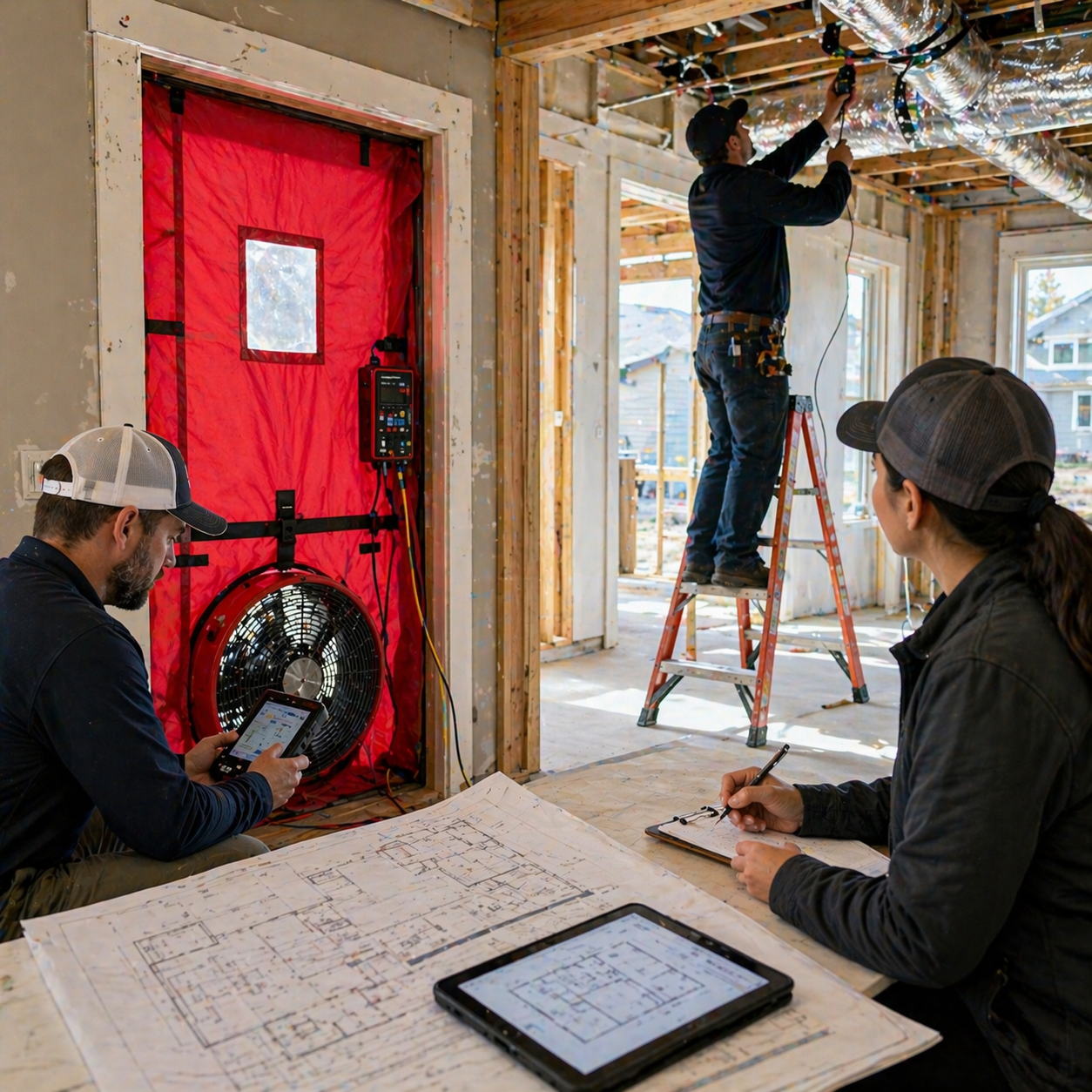
RunBrook brings a unique combination of design review knowledge, building science expertise, field testing experience, and certification support to peer review services. Because our team works across energy modeling, HERS ratings, HVAC grading, blower door testing, duct leakage testing, LEED, NGBS, FGBC, quality assurance inspections, and permit package support, we understand how design decisions translate into real-world building performance.
Project teams choose RunBrook for:
Independent third-party review
Energy modeling and code compliance knowledge
HVAC design and sizing review experience
Building envelope and air sealing expertise
HERS rating and green certification support
Residential, multifamily, and commercial project expertise
Clear findings and practical recommendations
Coordination with owners, builders, design teams, and contractors
Support for Florida projects and select projects outside Florida
Frequently Asked Questions
-
A peer review is most valuable early in design or before permit submission, but it can also be useful during construction, before testing, before certification submittals, or when performance issues arise.
-
RunBrook can review energy models, HVAC calculations, Manual J, Manual S, Manual D, duct designs, envelope details, certification documentation, code compliance reports, testing results, and related project documents.
-
Yes. RunBrook can review HVAC system sizing, load calculations, equipment selection, duct design, airflow assumptions, and related documentation to help project teams resolve sizing or performance concerns.
-
Yes. RunBrook can review documentation against applicable energy code requirements and help identify potential compliance concerns before permit review, inspection, or final submittal.
-
Yes. RunBrook can review certification strategy, documentation, modeling assumptions, testing requirements, and field verification items that may affect certification outcomes.
-
Yes. RunBrook can review air sealing, envelope details, duct design, and installation considerations to help reduce the risk of failed performance tests.
-
No. Peer review services are intended to provide independent technical feedback and support. They do not replace the responsibilities of the project’s licensed design professionals.
-
Yes. While many of RunBrook’s clients are located in Florida, our team can support select projects outside Florida depending on scope, schedule, and location.

Prefer to talk first?
Call us at 1-833-RunBrook
(1-833-786-2766)
or email us directly at info@runbrook.com
We’ll get back to you right away!
Discuss Your Next Project
If your project requires energy modeling, certification support, HERS ratings, blower door testing, or other building performance services, RunBrook can help keep the process moving from design through final verification.